A colour-changing print is a thermometer you can wear.
Most heat-sensitive prints use a thermochromic ink made of tiny capsules, each holding a dye, a developer and a solvent. When the solvent melts the colour switches off; when it sets again the colour comes back. Researchers have measured how these inks behave, and why they wear out faster than ordinary prints.
AI-generated image, not a photograph of a real person or place.
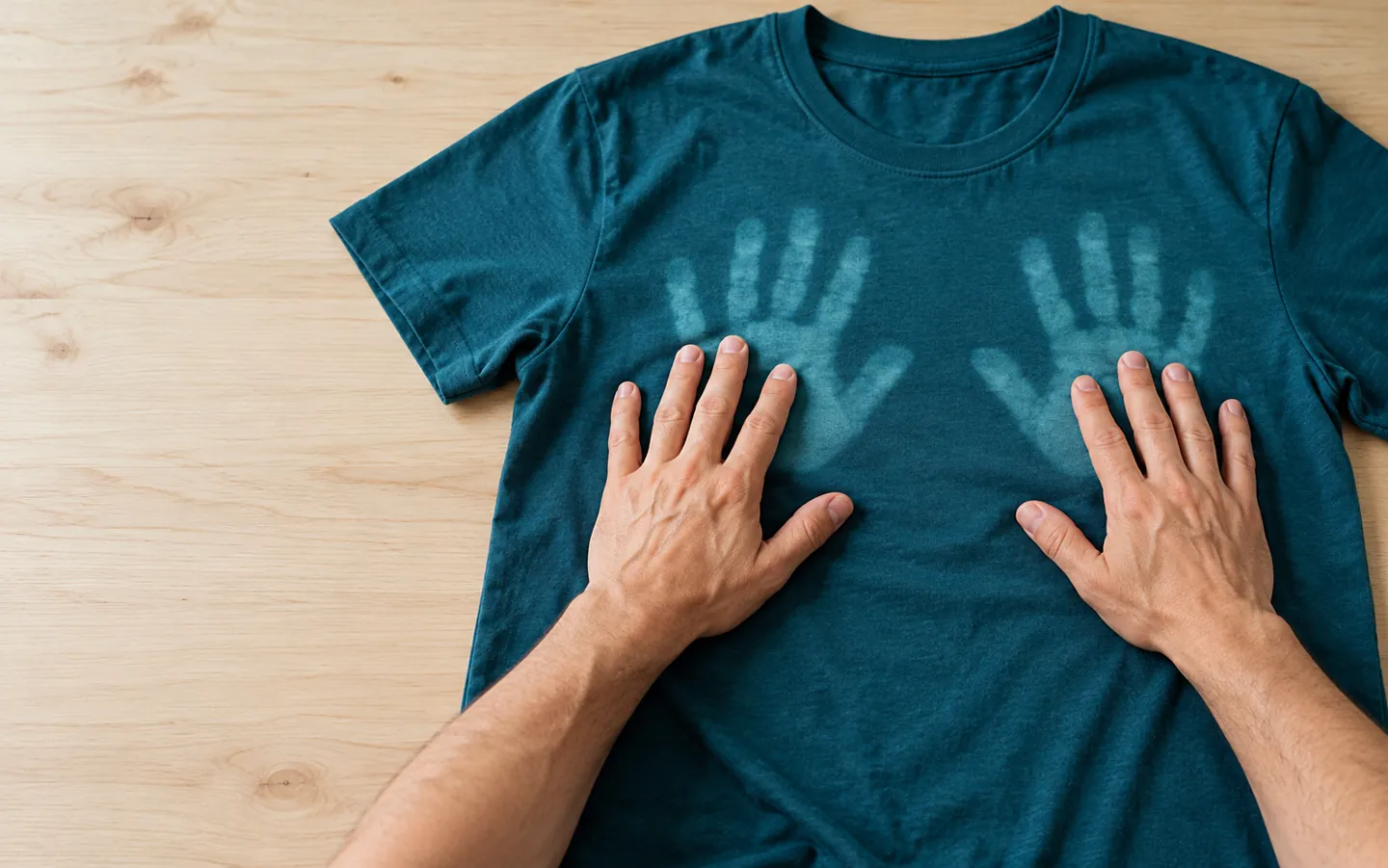
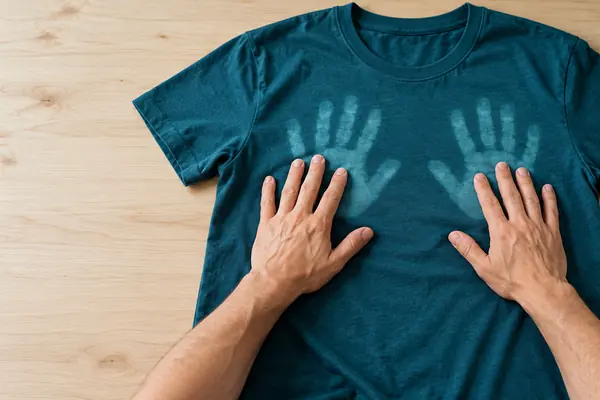
Cool: coloured
Warm: clear
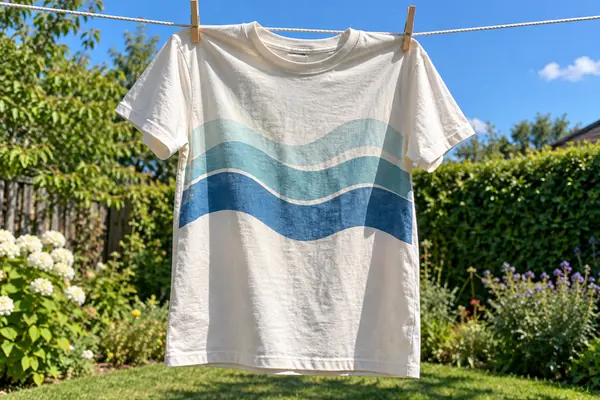
Sun: slowly dulls
How a leuco dye print behaves
THE SHORT ANSWER
A dye that switches off.
Three ingredients in each capsule. The solvent's melting point sets the switch.
LEUCO DYES
Coloured cool, clear warm
Below its switching point the dye and developer bond and show colour. When the solvent melts, the developer lets go of the dye and the colour disappears.
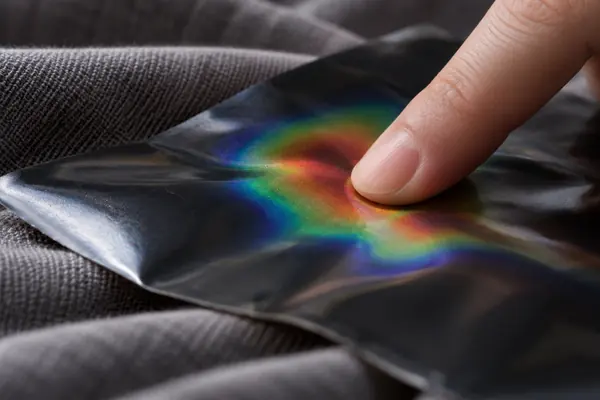
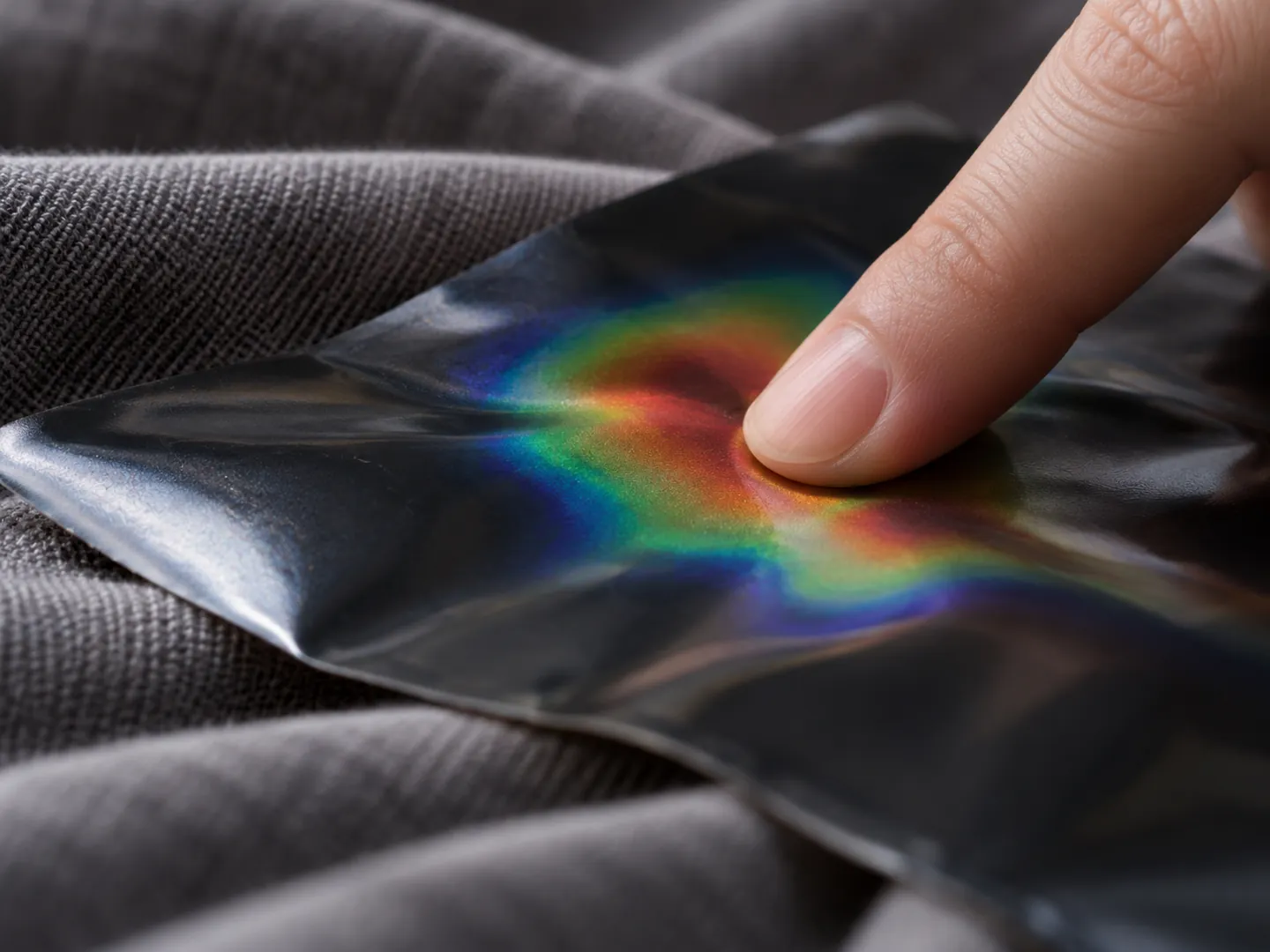
Liquid-crystal inks work differently: they shift through the spectrum from red towards blue as they warm, because their layered molecules reflect light by interference.
Thermochromic pigments are not crystalline, so they have low resistance to light, high heat and some chemicals. Thicker prints keep their colour change longer.
Pick a situation for a print with a body-heat switching point of about 31 °C. The bar shows how much colour you can expect.
Based on measurements of commercial leuco dye inks with a 31 °C activation temperature (Klanjšek Gunde et al., TAGA 2011). Real garments vary with the ink and how thickly it was printed.
TWO NUMBERS WORTH KNOWING
Big capsules, wide range.
One figure on size, one on temperature.
10× +
How much larger thermochromic capsules typically are than ordinary ink pigments
Each microcapsule holds the whole colour-changing system inside a melamine or epoxy resin shell, with sizes up to about 20 µm. Screen printing, used for clothes, can take the larger capsules.
CAPSULE SIZE · TAGA 2011
−15–65°C
Range of activation temperatures sold for leuco dye inks
Most uses stick to three bands: cold, about 10 °C, for chilled drinks; body heat, about 31 °C; and warm, about 43 °C, for food that is too hot.
SWITCHING POINTS · TAGA 2011
On cotton, a 2020 University of Zagreb study found a commercial orange thermochromic print changed visibly between 28 and 45 °C and had good laundry fastness once fixed at 140 °C.
LIVING WITH A COLOUR-CHANGE PRINT
Four things worth knowing.
These follow from how the inks are built and tested. For washing and drying, the garment's own care label comes first.
Read the switching temperature
The activation temperature is often the only figure makers give. A body-heat print switches near skin warmth; a cold-activated one needs a chill.
Expect a loop, not a switch
Heating and cooling follow slightly different colour paths, so the same temperature can look different depending on which way it is going.
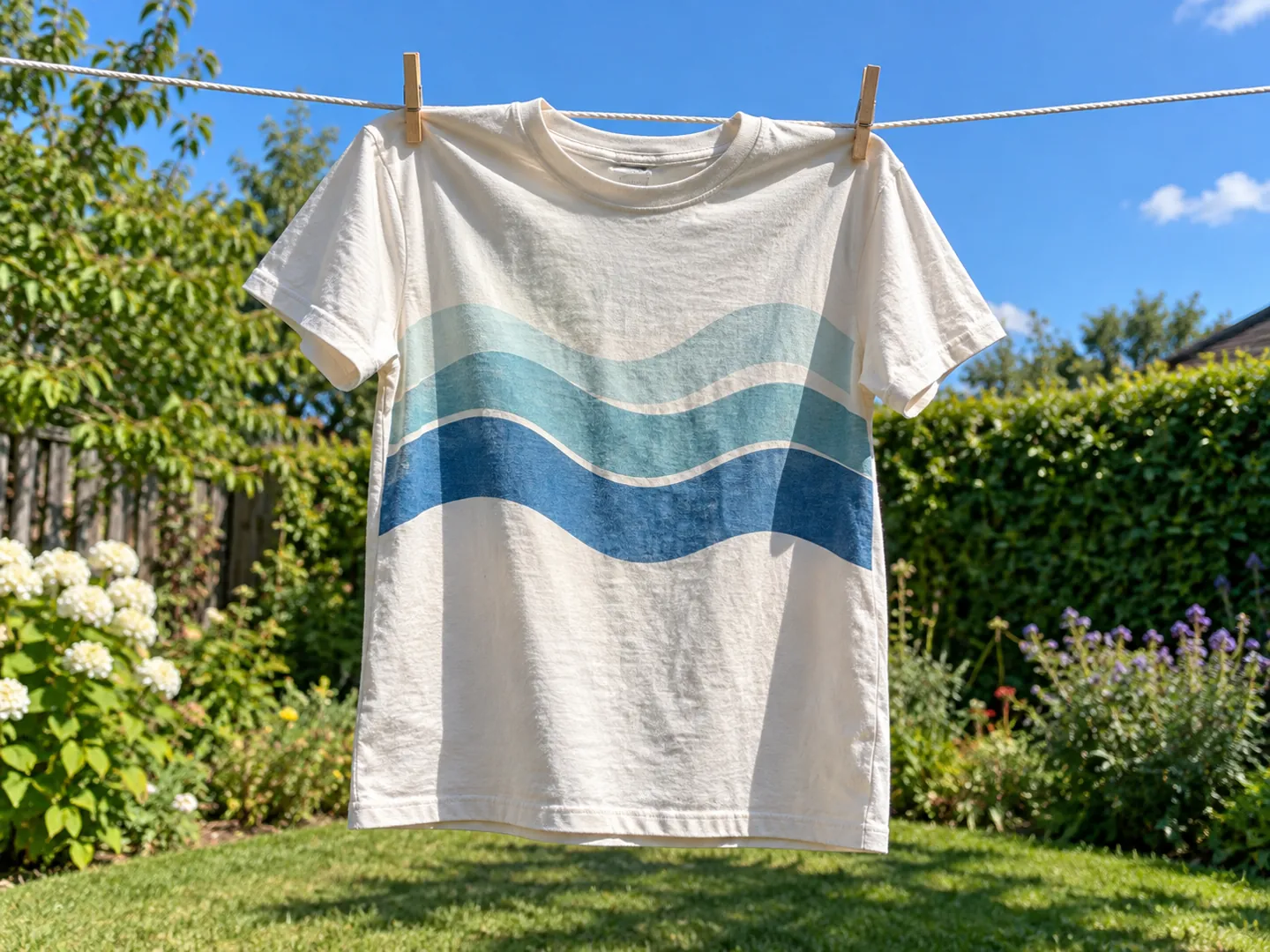
Keep it out of strong sun
Light gradually damages the dye inside the capsules. In lab tests the colour change dulled with longer exposure, and thicker layers lasted longer.
Follow the care label
If the capsule shells are broken the colour change is lost for good. How the print was fixed matters: the Zagreb study found good wash fastness after curing at 140 °C.
AI-generated image, not a photograph of a real person or place.AI-generated image, not a photograph of a real person or place.
TWO WAYS TO CHANGE COLOUR
Leuco dyes or liquid crystals.
Leuco dye inks change from coloured to colourless, or from one shade to another, because the dye molecule changes structure with help from the developer. They are the type used in most printed colour-change products, and the switch is believed to repeat several thousand times.
Liquid-crystal inks change continuously through the spectrum, producing iridescent colours that run from red to blue as they warm. Their molecules sit in ordered layers that reflect particular colours by interference, and the spacing changes with temperature, which is why they are used in strip thermometers.
Questions
Questions people ask
Why does a colour-change T-shirt fade where I touch it?
Most use leuco dye capsules. Your hand warms the print past the point where the capsule's solvent melts, which breaks up the coloured dye-developer pairs and turns the print clear.
What sets the temperature a print changes at?
The melting point of the solvent inside each capsule. Inks are sold with activation temperatures from about −15 °C up to 65 °C.
Why has my colour-change print stopped working?
Thermochromic pigments have low lightfastness and low resistance to high temperatures and some chemicals. If the capsule shells are damaged, the colour change is lost for good.
Does the colour change happen at one exact temperature?
No. It happens over a range, and the colour also depends on whether the print is warming or cooling, an effect called colour hysteresis.
Are liquid-crystal prints the same thing?
No. Liquid crystals shift through rainbow colours from red to blue as they warm, by reflecting light, while leuco dyes switch between coloured and clear.